4 Proven Study Techniques: Recall, Spacing, Mixing, Explain
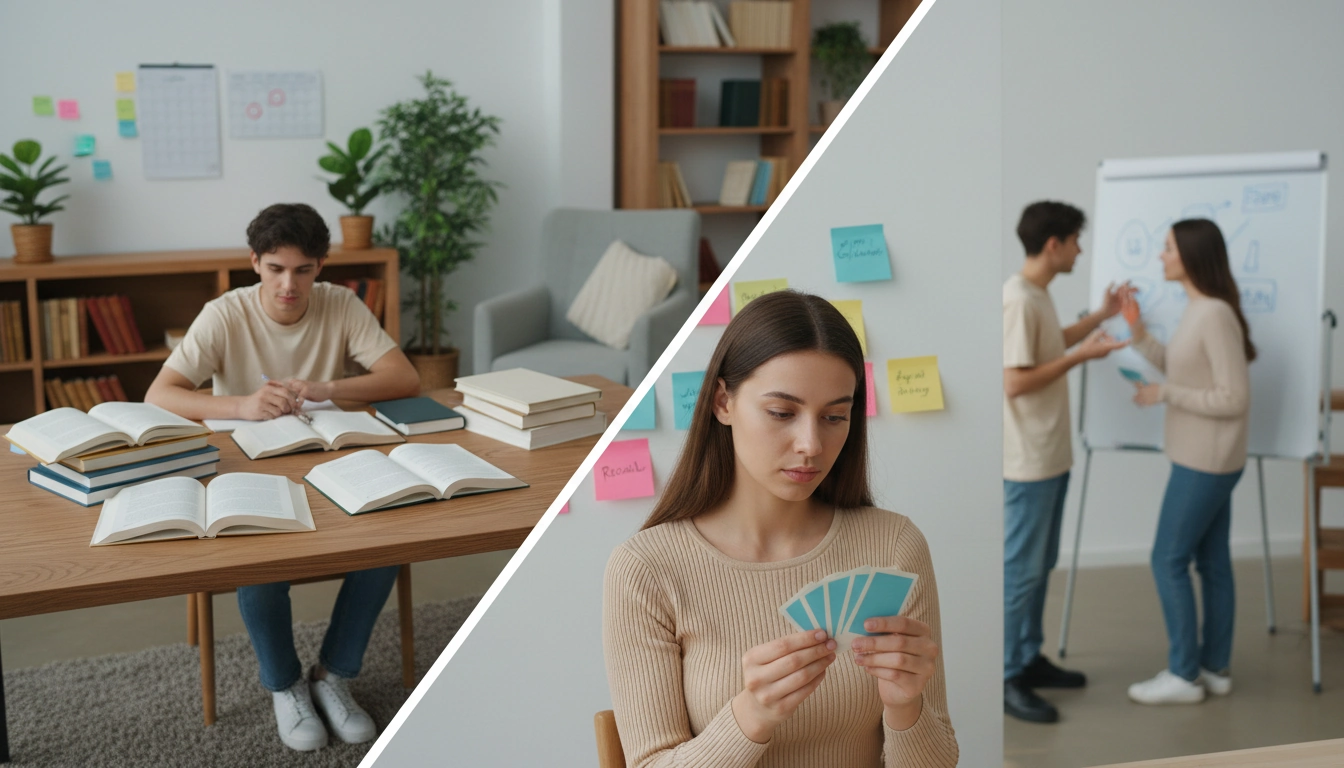
What are the 4 study techniques?
Four dependable study techniques that work across most subjects are active recall, spaced repetition, interleaving, and elaboration. Together, they help move information from short-term exposure to long-term, usable knowledge—without relying on last-minute cramming or passive rereading.
Answer
1) Active recall
Active recall means pulling information out of your memory on purpose—without looking at your notes first. Use practice questions, flashcards, or a blank sheet to write what you remember, then check what you missed. This technique strengthens retrieval, which is what most tests and real-world tasks require.
2) Spaced repetition
Spaced repetition spreads review sessions over time instead of repeating everything in one sitting. You revisit material right before you’re likely to forget it, which reinforces memory efficiently. A simple approach is to review the same topic after 1 day, 3 days, 1 week, and 2 weeks, adjusting based on how well you recall it.
3) Interleaving
Interleaving mixes related topics or problem types in a single study session. For example, in math you’d rotate through different kinds of problems rather than doing 20 of the same type in a row. This forces you to choose the right method each time, improving flexibility and exam performance.
4) Elaboration
Elaboration is the habit of explaining ideas in your own words and connecting them to what you already know. Ask “why does this work?” and “how does this relate to that concept?” Teaching the concept aloud or writing a short explanation can reveal gaps and deepen understanding.
For a deeper breakdown and practical ways to apply these methods, visit the main guide on study techniques.
For 4 Proven Study Techniques: Recall, Spacing, Mixing, Explain, the best answer depends on fit, material, care instructions, and how the product will be used day to day.
FAQ
How can I study more effectively without studying longer?
Prioritize active recall and spaced repetition, and keep sessions focused with short, timed blocks. Measure progress by what you can reproduce from memory, not by how much you reread.












Leave a comment